
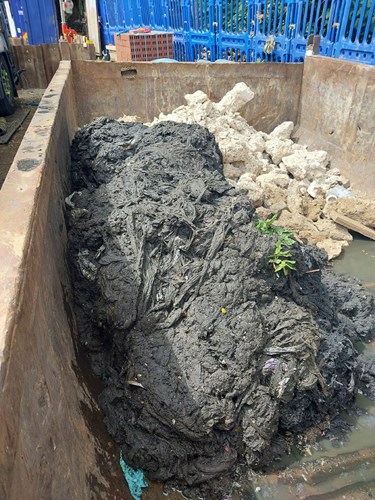
The blockage, estimated to be around 100 tonnes heavy, has been cleared by Thames Water.
A specialist team took more than a month to remove the congealed mass which weighed as much as eight double-decker buses.
It’s similar to the one which was found under Kingston in 2013 and is made up of wet wipes held together by fat, oil and grease.
The blockage was the equivalent of eight double-decker buses and more than ten metres below street-level taking more than a month to remove.
To clear the fatberg access to the sewer from a large manhole chamber measuring three metres in diameter was required by a specialist team equipped with gas monitors for safety. The team blasted, chiselled and sucked the wipes out from along 125-metres of pipe before it was craned into skips and taken to landfill.
The clearance followed the Government’s recent announcement it was introducing legislation to ban wet wipes that contain plastic.
Every year Thames Water clears 75,000 blockages from its sewer network, with wipes as the number one cause, with the company having to remove 3.8 billion each year in operations that cost £18 million.


