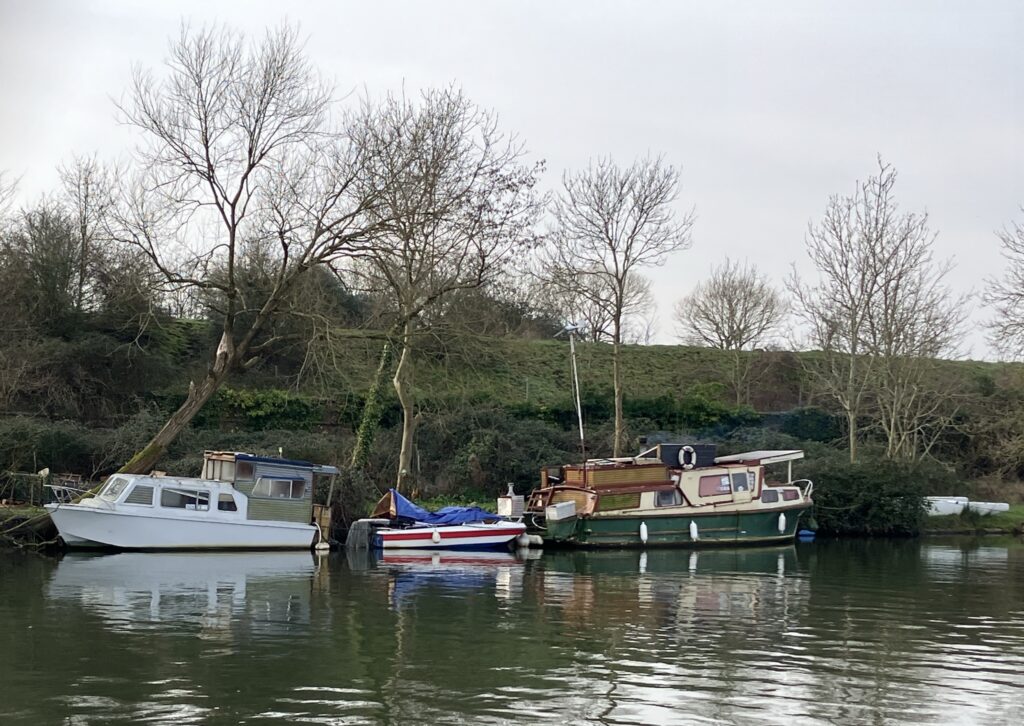
The Environment Agency brought civil proceedings for trespass against the owners of ten boats in 2024 that were moored on the banks of the Thames. Three owners accepted the ruling and moved on, but seven did not.
Boats can only stop on the Thames for up to 24 hours at designated short-stay mooring points, or on certain stretches of the riverbank.
The boats effectively dropped anchor to remain moored to the bank at West Molesey for years and wouldn’t move.
Their refusal to go obstructed access to stop at the riverbank for holidaymakers or anyone cruising on the water.
After the boats ignored requests to leave, the Environment Agency resorted to legal action.
In April 2024, Staines county court ruled the vessels were trespassing on the Thames. Judge Simpkiss said the Environment Agency could legally remove them on grounds of trespass, adding boats stationed permanently at West Molesey would change the character of the river.
Colin Chiverton, environment manager for the Thames at the Environment Agency, welcomed the High Court’s judgement in favour of the agency, upholding the original court ruling:
“We took this case to court to protect the public rights of navigation and mooring for everyone on the River Thames.
“The ability to stop at designated short-stay locations or other selected parts of the Thames for up to 24 hours allows for crews to refresh, recharge and refuel, but the boat-owners in this case refused to move, blocking others from docking. Whether it’s registration or mooring fees, everyone should pay their way on the river, helping to fund maintenance, services and facilities.”
The Environment Agency sought possession of a stretch of the Thames at West Molesey, close to Cherry Orchard Gardens on its south side.
The judge in the 2024 hearing confirmed that the Environment Agency, as owner of the riverbed, was entitled to make a claim in respect of boats trespassing in the water and the airspace over it.
In the High Court judgement published this month after a hearing in November, Mr Justice Bourne dismissed the boaters’ appeal of the original decision to rule against permanent mooring at West Molesey.
Any boaters trying to moor at West Molesey will be made aware that a possession order is in place, and that this will be enforced by the Environment Agency where necessary.
As well as throwing out the challenge by the group to moor permanently, Mr Justice Bourne said the Environment Agency had the authority to reclaim the riverbed and take possession of the land as a result, which the boaters had contested.
In further approval of the Environment Agency actions, the High Court upheld the original judge’s view that by having to leave their moorings at West Molesey, the boaters would not be made homeless.
The High Court additionally awarded the Environment Agency its legal costs of the case, to be determined at a later date.
The seven boat-owners now have six weeks to apply for permission to appeal the judgement.
If they don’t appeal, or if any application to further appeal is unsuccessful, the seven will have to move their boats. If they don’t, the Environment Agency can enforce the possession, which could see the boats removed.